Kare Plastic Surgery & Skin Health Center · Santa Monica & Los Angeles
Natural Revision Rhinoplasty
Los Angeles
804 7th Street, Santa Monica, CA 90403 · Near Montana Avenue · (310) 998-5533
Dorsal hump correction, tip refinement, and natural-looking secondary rhinoplasty results by dual board-certified plastic surgeon Dr. Raffy Karamanoukian at Kare Plastic Surgery in Santa Monica
Call (310) 998-5533 Request a Consultation
Precise Aesthetic TechniqueRevision rhinoplasty specialist
Natural-Looking ResultsBoard-Certified Plastic Surgeon
Natural Revision Rhinoplasty Los Angeles
The Difference Between a Good Revision Rhinoplasty
and a Natural One Is Measured in Millimeters
Dr. Raffy Karamanoukian, MD, FACS Dual Board-Certified Plastic Surgeon Graduate, UCLA School of Medicine · Natural Revision Rhinoplasty · Scar Expert · 20 Years Facial Surgery Experience · Kare Plastic Surgery, Santa Monica
Revision rhinoplasty is required in approximately 5–15% of primary rhinoplasty cases — a statistic that reflects the extraordinary technical complexity of nasal surgery and the narrow margin between an excellent result and one that requires secondary correction. Whether the primary procedure left a residual dorsal hump, created a pollybeak deformity by over-reducing the bridge, produced an over-pinched or over-refined tip, caused breathing difficulties through disruption of the nasal valve, or generated asymmetry or irregularity that the original surgeon did not fully address — the revision rhinoplasty patient in Los Angeles faces the most challenging surgical decision in cosmetic facial surgery: who to trust with a nose that has already been operated on.
At Kare Plastic Surgery & Skin Health Center at 804 7th Street in Santa Monica near Montana Avenue, UCLA School of Medicine graduate and dual board-certified plastic surgeon Dr. Raffy Karamanoukian, MD, FACS approaches every revision rhinoplasty with the meticulous anatomical analysis, natural-outcome philosophy, and scar management expertise that 20 years of facial plastic surgery and wound healing science provide. His fundamental approach to revision rhinoplasty is that the goal is a nose that looks like it was never operated on — natural, proportionate, and specific to the patient’s facial anatomy, not a template result.
5–15%Rhinoplasty revision rate (published clinical data)
12 moMinimum wait after prior rhinoplasty before revision
Naturalpreservation rhinoplasty philosophy
UCLASchool of Medicine education
Revision Rhinoplasty Services at Kare Plastic Surgery
- Dorsal hump residual reduction & dorsal line refinement
- Pollybeak deformity correction — bridge-tip transition
- Over-pinched / over-refined tip revision — tip reconstruction
- Nasal valve repair — breathing function restoration
- Cartilage grafting — spreader, tip, batten, columellar strut
- Asymmetry correction — twisted nose, uneven nostrils
- Nasolabial angle & columellar show correction
- Ethnic rhinoplasty revision — all backgrounds & skin types
- Post-rhinoplasty scar management — Vbeam + silicone protocol
Kare Plastic Surgery · Santa Monica · Near Montana Avenue
Unhappy with your rhinoplasty results? Schedule a revision consultation today.
Patient Result — Kare Plastic Surgery, Santa Monica · Dr. Raffy Karamanoukian
Revision Rhinoplasty — Before & After
Actual patient of Dr. Raffy Karamanoukian · Individual results may vary
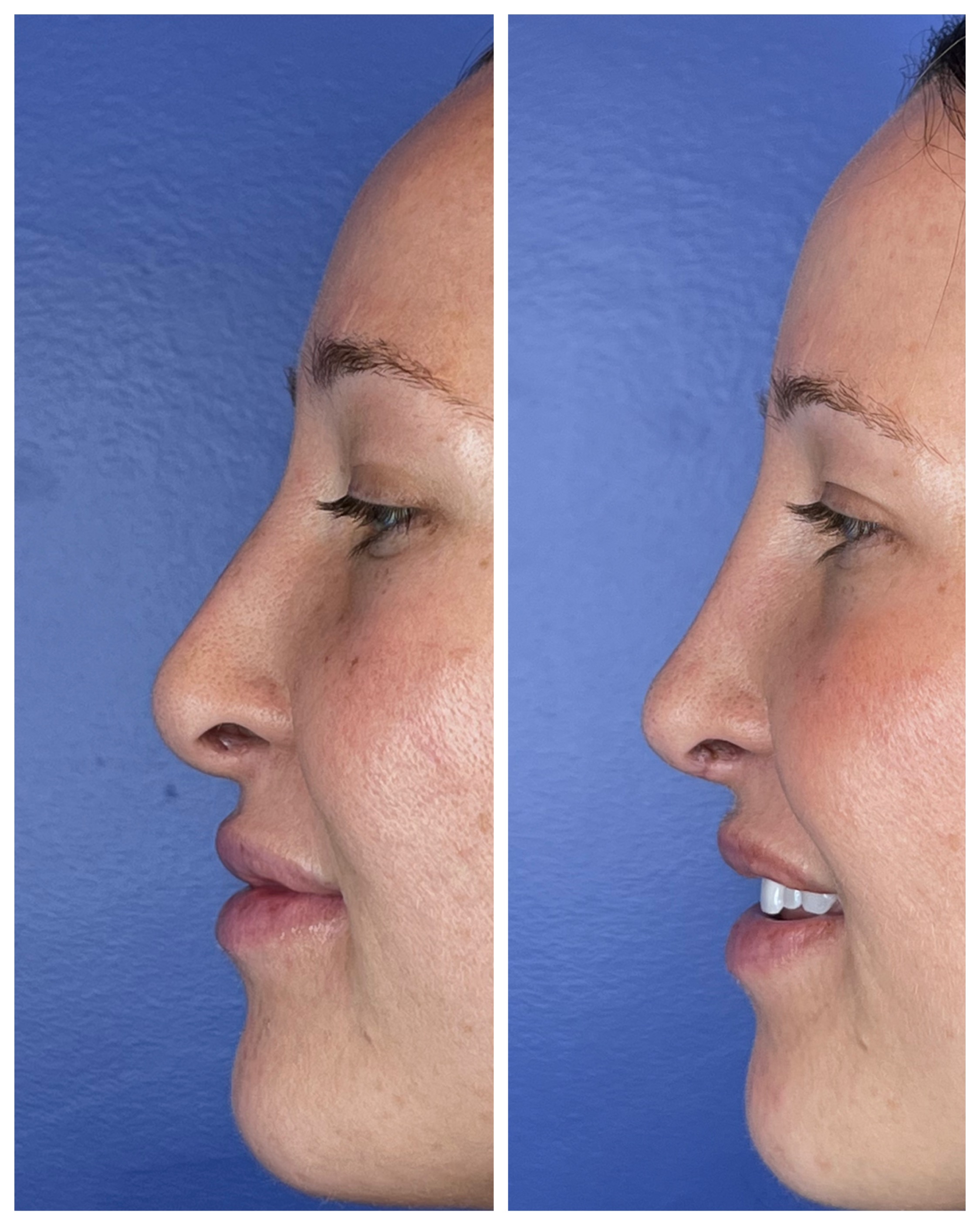
Before — Primary Rhinoplasty Result
After — Revision by Dr. Karamanoukian
Corrections Made Dorsal hump reduction · Tip projection refinement · Nasolabial angle correction
Technique Open rhinoplasty approach · Cartilage reshaping · Natural dorsal line preservation
Before: Residual dorsal hump, over-projected nasal tip, and acute nasolabial angle producing an unbalanced profile. After: Elegant straight dorsal line, refined and appropriately projected tip, and harmonious nasolabial angle — a natural, beautiful nasal profile that looks never operated on. Dr. Raffy Karamanoukian, MD, FACS · Kare Plastic Surgery, Santa Monica
Common Revision Presentations
Why Patients Seek Revision Rhinoplasty in Los Angeles
“If you're not happy with your rhinoplasty results, it may be time for a precise reset so you can achieve your aesthetic goals.”
— Dr. Raffy Karamanoukian · Kare Plastic Surgery, Santa Monica
Post-rhinoplasty scar management at Kare: Every rhinoplasty patient at Kare Plastic Surgery receives a structured post-operative scar protocol — silicone tape to the dorsum, Vbeam laser to the external incision at 4–6 weeks, and careful monitoring of tip definition changes during the 12-month healing process. Dr. Karamanoukian’s nationally recognized scar expertise is applied to rhinoplasty recovery from day one, because scar quality at the columella and nasal dorsum is as important to the final result as the surgical technique itself.
Frequently Asked Questions
Where can I get natural revision rhinoplasty in Los Angeles?
Kare Plastic Surgery at 804 7th Street in Santa Monica near Montana Avenue offers natural revision rhinoplasty by UCLA-trained dual board-certified plastic surgeon Dr. Raffy Karamanoukian with 20 years of rhinoplasty and facial surgery experience. Dorsal hump correction, pollybeak revision, tip reconstruction, and natural-looking secondary rhinoplasty results. Call (310) 998-5533. We serve patients from Santa Monica, Beverly Hills, Brentwood, Malibu, and all of Los Angeles.
How long do I need to wait after my first rhinoplasty before getting a revision?
A minimum of 12 months after your most recent rhinoplasty is required before any revision procedure — and in some cases, 18–24 months is preferable. The nasal tissues continue to remodel for at least a year after surgery as swelling resolves, cartilage heals, and the skin re-drapes over the nasal framework. Operating on a nose before the healing process is complete produces unpredictable results because the tissue is still actively changing. At your consultation, Dr. Karamanoukian evaluates the maturity of the primary result and advises on the optimal timing for revision.
Does revision rhinoplasty require cartilage grafting?
Many revision rhinoplasty cases require cartilage grafts to reconstruct weakened or over-resected nasal structures. The most commonly used graft sources are the nasal septum (preferred — same surgical field), the auricular conchal bowl cartilage from behind the ear (accessible through a hidden incision), and rib cartilage for major structural reconstruction requiring large graft volumes. Dr. Karamanoukian determines which graft source is required at consultation based on the structural deficiency to be corrected and the available septal cartilage remaining after prior surgery.
Related Resources at Kare Plastic Surgery
Kare Plastic Surgery & Skin Health Center · Santa Monica · Near Montana Avenue
Schedule a Revision Rhinoplasty Consultation
Schedule a consultation with Dr. Raffy Karamanoukian, UCLA School of Medicine graduate and dual board-certified plastic surgeon — natural revision rhinoplasty, dorsal hump correction, tip refinement, and scar-minimizing technique in Santa Monica and Los Angeles.