Kare Plastic Surgery & Skin Health Center · Santa Monica & Los Angeles
Skin Peels Los Angeles
804 7th Street, Santa Monica, CA 90403 · Near Montana Avenue · (310) 998-5533
Medical-grade skin peels for melasma, acne scars, hyperpigmentation, and skin resurfacing by UCLA-trained dual board-certified plastic surgeon Dr. Raffy Karamanoukian at Kare Plastic Surgery in Santa Monica. Melapeel, TCA Peel, Obagi Blue Peel, Jessner Peel, Cosmelan, and microneedling — all skin types treated.
Call (310) 998-5533 Request a Consultation
UCLASchool of Medicine
Melapeel& Cosmelan Protocols
TCAObagi Blue Peel & Jessner
UVWood's Lamp Melasma Imaging
Skin Peels Los Angeles
The Right Peel for Your Skin. Chosen by a Surgeon Who Understands Skin Science.
Dr. Raffy Karamanoukian, MD, FACS Dual Board-Certified Plastic Surgeon Graduate, UCLA School of Medicine · Melapeel · Cosmelan · TCA · Obagi Blue Peel · Jessner · Microneedling · Melasma · Melarase · Kare Plastic Surgery, Santa Monica
Skin is the most visible organ of the body and the one most directly affected by the environment we live in. In Los Angeles and Santa Monica, where year-round sun exposure is among the highest in the United States, cumulative UV damage is an almost universal concern — whether it presents as melasma, solar hyperpigmentation, acne scarring, uneven tone, or surface texture irregularity. Medical-grade skin peels address these concerns at the cellular level, removing damaged skin layers, interrupting the melanin production pathways that drive hyperpigmentation, and stimulating the production of new collagen beneath the treated surface. The result is skin that not only looks better immediately after treatment but continues to improve over weeks and months as the regenerative response matures.
At Kare Plastic Surgery and Skin Health Center at 804 7th Street in Santa Monica near Montana Avenue, UCLA School of Medicine graduate and dual board-certified plastic surgeon Dr. Raffy Karamanoukian, MD, FACS brings a distinctly clinical approach to skin peel treatments. His background in surgical skin science, scar biology, and pigmentation disorders — combined with his practice at the Kare Scar Treatment Center — means that patients seeking peels for melasma, post-inflammatory hyperpigmentation, acne scarring, or skin resurfacing receive the same level of medical rigor and individualized assessment that he applies to surgical cases. At Kare, a peel is not a menu item. It is a prescription.
UCLASchool of Medicine — Advanced training
UVWood's lamp imaging for melasma mapping
6+Distinct medical-grade peel protocols offered
AllFitzpatrick skin types safely treated
Skin Peel and Resurfacing Services at Kare Plastic Surgery Santa Monica
- Melapeel — targeted melanin suppression for melasma and hyperpigmentation
- Cosmelan Depigmentation Peel — the gold standard for melasma treatment
- TCA Peel (10% to 35%) — medium-depth resurfacing for texture, tone, and acne scars
- Obagi Blue Peel — TCA-based medium-depth peel with controlled penetration
- Jessner Peel — salicylic acid, lactic acid, and resorcinol combination
- Acne Peel — salicylic acid and glycolic acid protocol for active acne and mild scarring
- Microneedling — collagen induction therapy for acne scars and skin resurfacing
- Melarase AM and PM — home maintenance regimen for melasma and pigmentation
- Combination peel plus microneedling — superior acne scar outcomes per 2025 meta-analysis
Kare Plastic Surgery · Santa Monica · Near Montana Avenue
Melasma, acne scars, or uneven skin tone? Schedule a skin peel consultation today.
Melasma Assessment — Dr. Raffy Karamanoukian · Kare Plastic Surgery, Santa Monica
Wood's Lamp UV Imaging — Seeing Melasma Beneath the Skin Surface
UV diagnostic photography · Gold standard for melasma depth and distribution mapping · Used at Kare Plastic Surgery before every melasma peel treatment plan
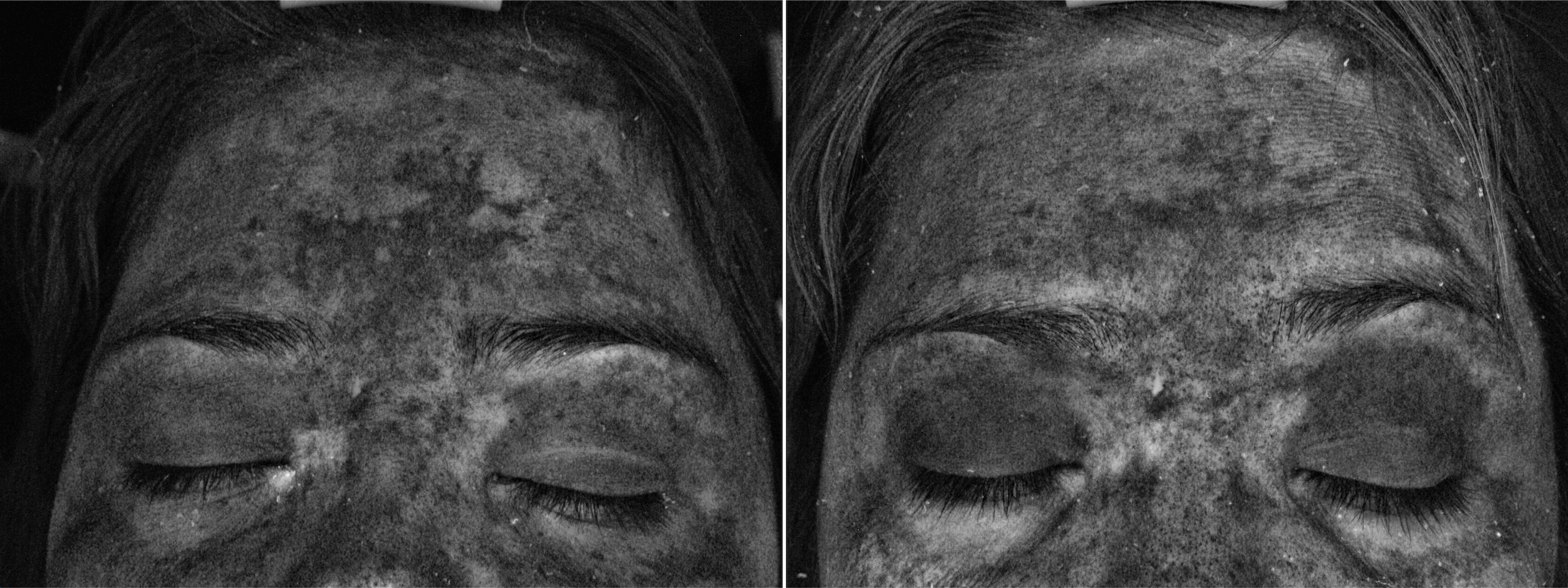
UV Imaging · Bilateral Facial Views Severe melasma field · Full face distribution · Deep and superficial melanin mapping
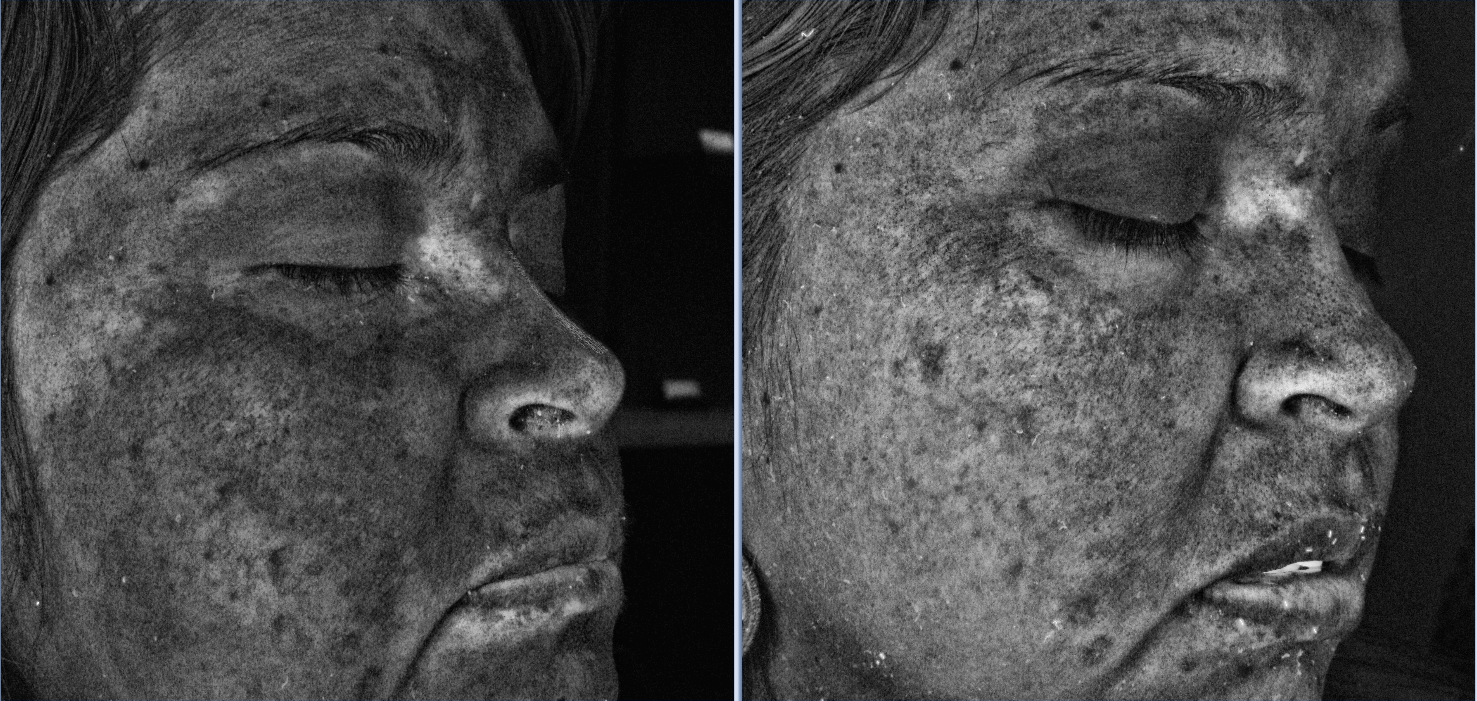
UV Imaging · Forehead and Upper Face Forehead and periorbital melasma field · UV reveals sub-surface melanin invisible in standard photography

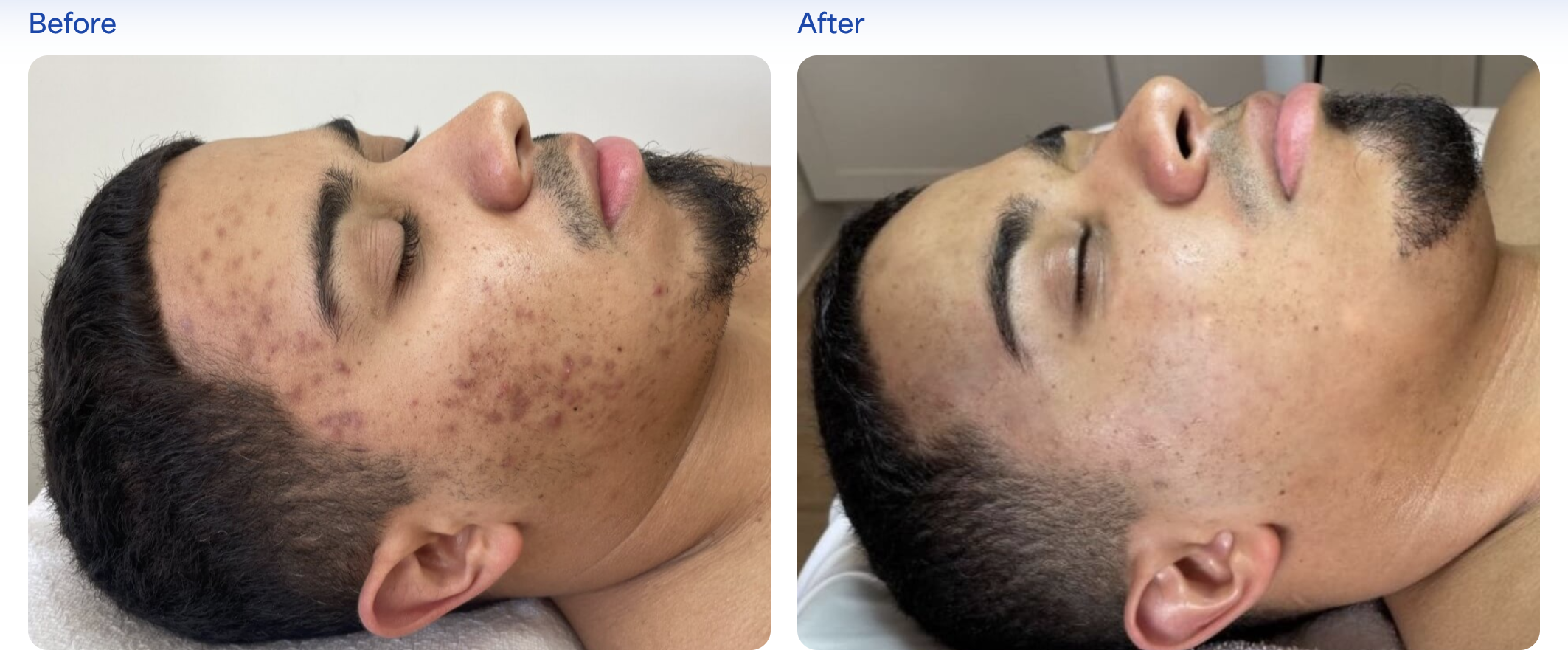
Clinical Before and After · Peel Treatment Diffuse hyperpigmentation and acne scarring · Post-peel improvement in texture and pigmentation distribution
Wood's lamp ultraviolet imaging is the gold standard for melasma depth assessment — it reveals sub-surface melanin deposits invisible in standard photography, allowing Dr. Karamanoukian to classify melasma as epidermal, dermal, or mixed type before selecting the appropriate peel protocol. Epidermal melasma responds well to superficial and medium-depth peels. Dermal melasma requires deeper treatment and long-term melanin suppression with Melarase home maintenance. Mixed-type melasma requires a staged approach. Without UV imaging, selecting the wrong peel for the wrong melasma depth produces disappointing results or paradoxical hyperpigmentation. Dr. Raffy Karamanoukian, MD, FACS · Kare Plastic Surgery, Santa Monica
Melasma and Pigmentation Treatment
Melapeel and Cosmelan — The Premier Peels for Melasma in Los Angeles
Melasma is one of the most challenging conditions in aesthetic dermatology. It is driven by melanocyte hyperactivity — the pigment-producing cells of the skin overproduce melanin in response to UV exposure, hormonal changes (particularly estrogen and progesterone), and inflammatory triggers. In the Los Angeles environment, where UV radiation is persistent year-round and outdoor lifestyle is culturally embedded, melasma is extremely common, particularly in patients with Fitzpatrick skin types III through VI — the population with the highest melanocyte activity and therefore the highest melasma burden. Standard peels in the wrong hands or with the wrong protocol can actually worsen melasma by triggering post-inflammatory hyperpigmentation. The treatment approach matters enormously.
Melapeel — Targeted Melanin Suppression
Melapeel is a specialized depigmenting peel that combines chemical exfoliation with active melanin-regulating ingredients including kojic acid, phytic acid, and azelaic acid in a precisely calibrated formulation designed for hyperpigmentation-prone skin. Unlike aggressive peels that strip the surface without addressing the underlying melanocyte activity, Melapeel works at two levels simultaneously: exfoliating the hyperpigmented surface layer while delivering active ingredients that inhibit tyrosinase and reduce melanin synthesis in the layers below. This dual-mechanism approach produces more lasting pigment correction than surface-only peels and carries a lower risk of post-inflammatory hyperpigmentation in darker skin types. Melapeel is typically performed as a series of 3 to 6 treatments spaced 3 to 4 weeks apart, paired with the Melarase home maintenance cream series for optimal and sustained results.
Cosmelan — The Gold Standard Depigmentation Peel
Cosmelan is the most widely validated professional depigmentation system for melasma and represents the gold standard for treating hormonal and UV-driven hyperpigmentation across all skin types. It works through a two-phase protocol. The Cosmelan 1 mask is applied in-office and left on the skin for 8 to 12 hours depending on the patient's Fitzpatrick phototype and skin sensitivity before being removed at home. Following this, the Cosmelan 2 maintenance cream is used daily for several months to sustain melanin suppression and prevent new spot formation. The active ingredient complex inhibits tyrosinase at multiple pathway points, producing a comprehensive melanin suppression that is more thorough than single-acid peels alone.
The MD version of Cosmelan — available at Kare Plastic Surgery — adds hydroquinone to the formulation for patients who are candidates for this enhanced depigmenting agent. Downtime for Cosmelan is typically 3 to 5 days of peeling and flaking with 2 weeks of social sensitivity. Optimal pigmentation results are visible at 4 to 8 weeks as the full depigmenting response matures, with continued improvement over 3 to 4 months. Dr. Karamanoukian pairs Cosmelan with the Melarase AM and PM home cream protocol to extend and maintain the peel results.
Melapeel
Melanin Suppression + Chemical Exfoliation
Kojic acid, phytic acid, and azelaic acid combination. Dual-mechanism: surface exfoliation plus sub-surface melanin inhibition. Series of 3 to 6 treatments. Best for persistent facial hyperpigmentation and melasma in all skin types. Paired with Melarase AM/PM home maintenance for sustained results. Lower risk of post-inflammatory hyperpigmentation in darker skin tones than TCA alone.
Cosmelan
The Gold Standard Depigmentation System
In-office mask applied for 8 to 12 hours based on phototype, followed by Cosmelan 2 home maintenance for months. MD version available with hydroquinone. Inhibits tyrosinase at multiple pathway points. Effective for all skin types including Fitzpatrick V and VI. Cosmelan 2 home cream sustains and extends results. Widely validated in clinical literature as most effective melasma treatment system.
Melarase AM and PM at Kare Plastic Surgery: Dr. Karamanoukian prescribes the Melarase home skincare system as an integral part of every melasma peel treatment plan. Melarase AM contains broad-spectrum SPF with melanin-suppressing ingredients for daytime protection. Melarase PM contains a higher concentration of depigmenting actives for overnight melanin correction. Used in combination with in-office peels, the Melarase system extends and maintains peel results and significantly reduces the risk of melasma recurrence from daily UV exposure in the Los Angeles environment.
Resurfacing and Acne Peels
TCA Peel, Obagi Blue Peel, Jessner Peel, and Acne Peel at Kare Plastic Surgery
Dr. Karamanoukian offers a full spectrum of medical-grade chemical peels ranging from superficial salicylic and glycolic acid formulations for mild acne and texture issues to medium-depth TCA protocols for significant photoaging, scar improvement, and tone correction. The depth, concentration, and combination of agents in each peel treatment is selected based on the specific skin condition, the Fitzpatrick skin type, the patient's tolerance for downtime, and the treatment goals established at consultation.
| Peel |
Depth |
Primary Indications |
Downtime |
Best For |
| Acne / Salicylic Peel |
Superficial |
Active acne, clogged pores, mild scarring, oily skin |
1 to 3 days |
Active acne, oily skin, mild post-acne marks |
| Jessner Peel |
Superficial to medium |
Acne, mild hyperpigmentation, texture, acne scars |
3 to 7 days |
Combination skin, acne scarring, photoaging Fitzpatrick I to IV |
| TCA Peel (15 to 25%) |
Medium depth |
Photoaging, acne scars, hyperpigmentation, fine lines, texture |
7 to 10 days |
Significant photoaging, acne scarring, tone irregularity |
| Obagi Blue Peel |
Medium depth |
Photoaging, acne scars, fine lines, pore size, texture |
7 to 14 days |
Skin laxity, photoaging, moderate acne scarring — the blue indicator dye allows precise depth control |
| Jessner plus TCA |
Enhanced medium depth |
Combined acne scar and pigmentation treatment |
7 to 10 days |
Fitzpatrick III to V with both acne scarring and hyperpigmentation |
| Melapeel |
Superficial to medium |
Melasma, PIH, solar lentigos, uneven tone |
3 to 5 days |
All skin types especially Fitzpatrick IV to VI |
| Cosmelan |
Medium |
Melasma, chloasma, hormonal hyperpigmentation |
3 to 5 days + 2 wks sensitivity |
All skin types — gold standard for melasma treatment |
The Obagi Blue Peel — Controlled Medium-Depth Resurfacing
The Obagi Blue Peel is a TCA-based medium-depth peel distinguished by the addition of a blue indicator dye that temporarily changes the skin's surface color during application, allowing Dr. Karamanoukian to precisely monitor penetration depth and ensure uniform coverage across the treatment area. This visual control mechanism is the Obagi Blue Peel's key clinical advantage — it reduces the risk of uneven penetration that produces patchy results and reduces the risk of inadvertently exceeding the target depth in areas of thin or sensitive skin. The Blue Peel is particularly effective for patients with moderate photoaging, acne scarring, and significant skin texture irregularity who want meaningful improvement with a defined and predictable recovery period.
Jessner Peel — The Combination Approach
The Jessner solution combines salicylic acid, lactic acid, and resorcinol in a formulation that achieves superficial to medium-depth skin penetration through multiple complementary mechanisms. Salicylic acid is lipid-soluble and penetrates the follicular canal to address comedonal acne and sebaceous congestion. Lactic acid provides gentle keratolysis and mild pigment-brightening. Resorcinol disrupts the bonds between keratinocytes to facilitate uniform exfoliation. Together, they produce a consistently uniform peel with less risk of uneven frosting than single-acid TCA peels at equivalent depths. The Jessner peel is often used as a preparation step before TCA in the Jessner-TCA combination protocol, which produces enhanced medium-depth results superior to either agent alone for treating acne scarring and hyperpigmentation, particularly in Fitzpatrick types III to V.
"The decision between a Melapeel, a Jessner, a TCA, and a Cosmelan is not a preference question. It is a clinical decision based on what is in the skin, how deep it is, and what the skin type can tolerate. I take those images with the UV lamp before every melasma consultation because I have seen too many patients who received the wrong peel for their melasma type and ended up darker after treatment than before. The imaging is not optional. It is necessary."
— Dr. Raffy Karamanoukian, MD, FACS · Kare Plastic Surgery, Santa Monica
Microneedling for Acne Scars and Skin Resurfacing
Microneedling at Kare Plastic Surgery — Collagen Induction for Acne Scars and Skin Renewal
Microneedling, also known as collagen induction therapy, uses a device with fine medical-grade needles to create thousands of controlled micro-injuries in the skin surface at a precise and adjustable depth. Each micro-channel triggers the skin's wound healing response without creating macroscopic damage — stimulating fibroblast activation, collagen synthesis, and elastin remodeling in the treated dermis. The cumulative result over a series of 3 to 6 sessions is a measurable improvement in acne scar depth and surface texture that develops progressively over 4 to 6 months as the collagen remodeling response matures.
Microneedling is particularly effective for rolling scars and shallow boxcar scars, which represent the majority of post-acne scarring in the Los Angeles patient population. It is safe across all Fitzpatrick skin types including the darker skin tones that carry the highest risk of post-inflammatory hyperpigmentation from more aggressive ablative resurfacing techniques. For ice pick scars — the deep, narrow scar channels that microneedling alone cannot address — Dr. Karamanoukian combines microneedling with TCA Cross (100% TCA applied focally to individual ice pick scars) to selectively induce collagen production within the narrow scar channel without affecting surrounding skin.
Microneedling Combined with Chemical Peeling — The Evidence
A 2025 systematic review and meta-analysis published in the Journal of Dermatology and Dermatologic Surgery evaluated the combination of microneedling with chemical peeling versus either treatment alone for atrophic acne scars. The analysis found that the combination regimen outperformed microneedling or chemical peeling monotherapy across studies using Jessner solution, TCA 15 to 20%, and glycolic acid peels in patients with Fitzpatrick skin types III through V. The biological rationale is straightforward: microneedling creates micro-channels that enhance penetration of the chemical peel into the dermis while simultaneously triggering its own collagen induction cascade. At Kare Plastic Surgery, Dr. Karamanoukian offers this evidence-based combination protocol for patients with moderate to severe atrophic acne scarring who want to maximize improvement within a manageable treatment course.
Microneedling Monotherapy
Collagen Induction for Rolling and Boxcar Scars
3 to 6 sessions spaced 4 to 6 weeks apart. Safe for Fitzpatrick I through VI. 1 to 2 days downtime per session. Progressive improvement over 4 to 6 months. Optional platelet-rich plasma (PRP) added at time of treatment to enhance collagen stimulation. Best for mild to moderate rolling scars and superficial boxcar scars with minimal pigmentation concern.
Microneedling plus Chemical Peel
The Combination Protocol — Superior Outcomes
Microneedling performed first to create channels, followed immediately by Jessner or TCA application for enhanced dermal penetration. 2025 meta-analysis confirms superior outcomes versus either alone for Fitzpatrick III to V atrophic acne scars. 3 to 6 combination sessions. Best for moderate to severe acne scarring with concurrent hyperpigmentation concerns in darker skin types.
microneedling skinpen
Improve Your Skin Quality with SkinPen
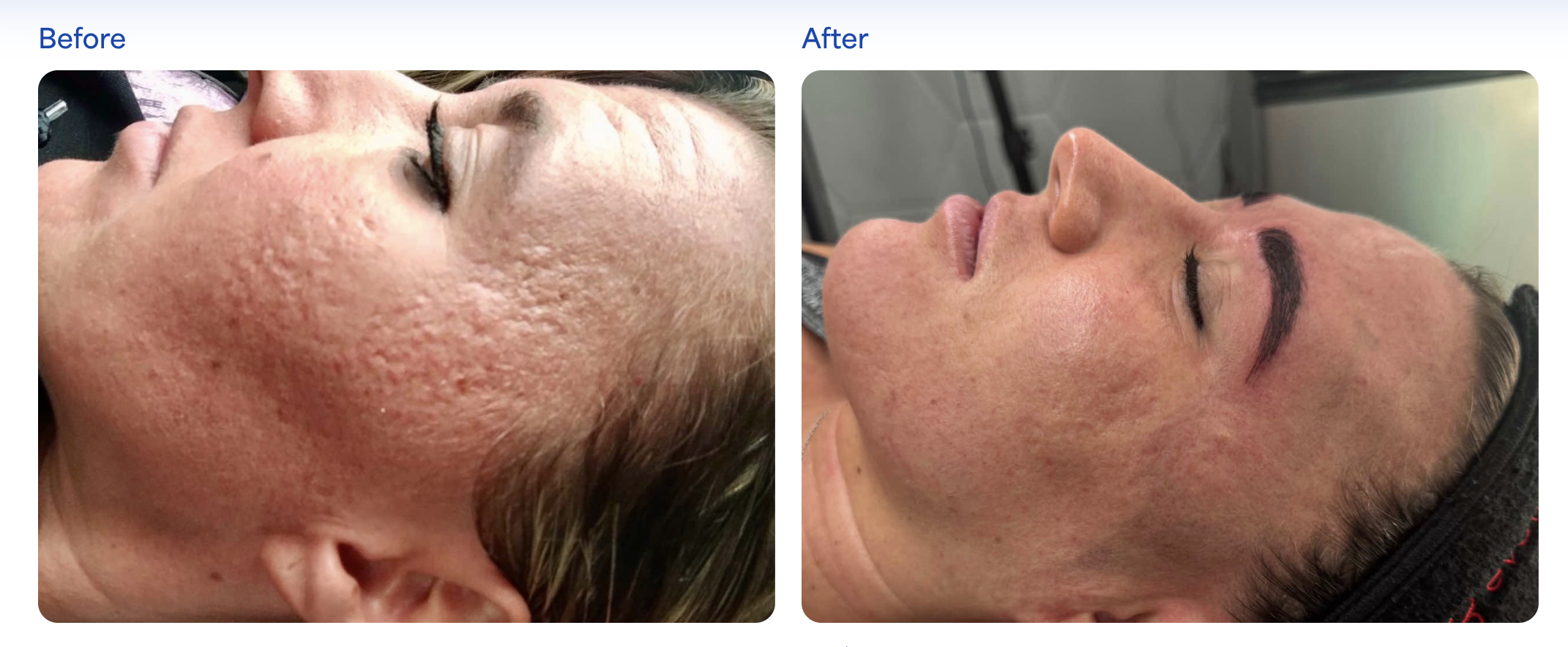
Microneedling acne scarsPhotos Courtesy of SkinPen
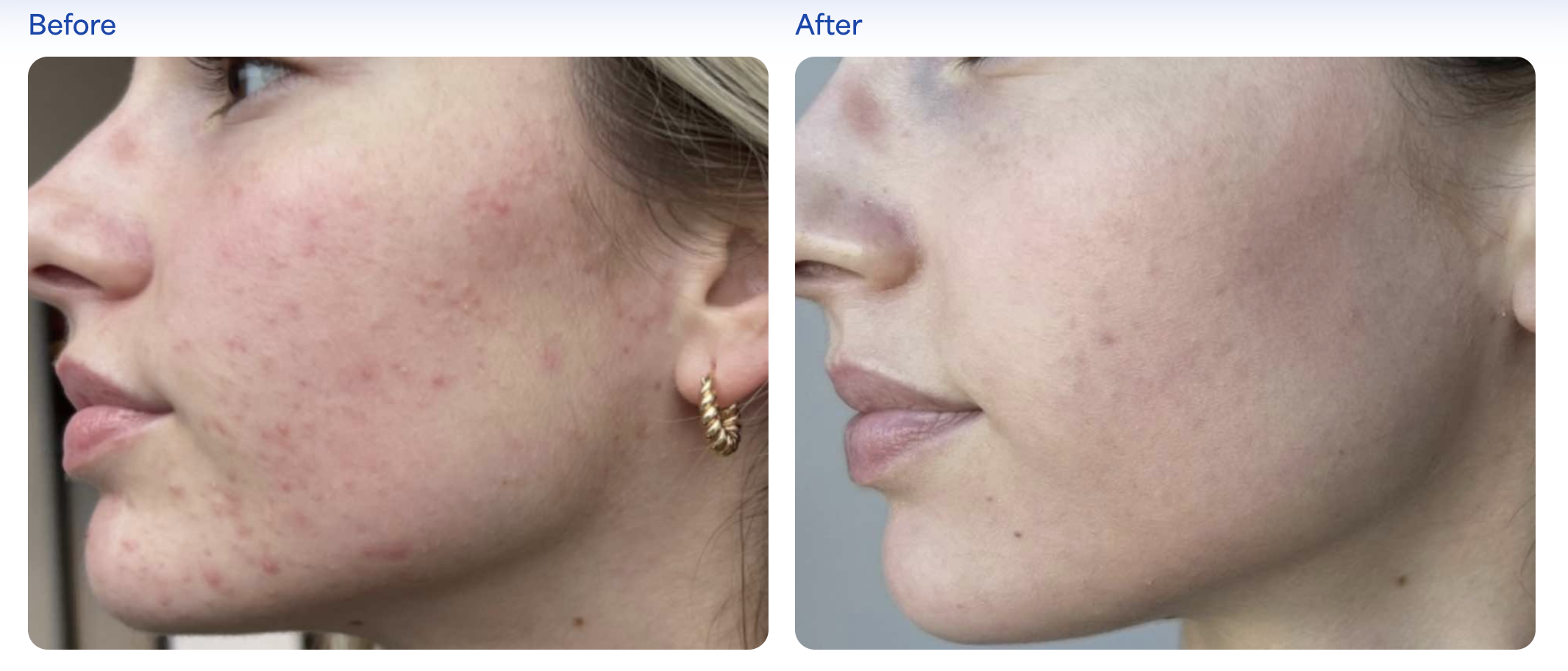
microneedling skin texturePhotos Courtesy of SkinPen
microneedling acnePhotos Courtesy of SkinPen
Frequently Asked Questions About Skin Peels in Los Angeles
Where can I get medical-grade skin peels in Los Angeles?
Kare Plastic Surgery at 804 7th Street in Santa Monica near Montana Avenue offers expert medical-grade skin peels by UCLA-trained dual board-certified plastic surgeon Dr. Raffy Karamanoukian. Melapeel, TCA Peel, Obagi Blue Peel, Jessner Peel, Cosmelan, acne peels, and microneedling. UV Wood's lamp imaging for melasma assessment. Melarase home maintenance. All skin types. Call (310) 998-5533. We serve patients from Santa Monica, Beverly Hills, Brentwood, Malibu, and all of Los Angeles.
How long is the downtime after a chemical peel?
Downtime depends on the peel depth. Superficial acne peels and Jessner peels produce 1 to 5 days of redness and mild flaking. Medium-depth TCA and Obagi Blue Peels produce 7 to 10 days of more visible peeling and skin shedding. Cosmelan produces 3 to 5 days of active peeling followed by 2 weeks of social sensitivity as the skin tone normalizes. The deeper the peel, the more dramatic the initial improvement but the longer the recovery. Dr. Karamanoukian discusses the expected downtime for your specific recommended peel at consultation and advises on scheduling around upcoming events or commitments.
Can chemical peels be used on darker skin tones?
Yes, when chosen and applied correctly. Fitzpatrick types IV through VI benefit enormously from correctly selected peels — Melapeel and Cosmelan are specifically designed for all skin tones including the darkest. The key is matching the peel to the skin type: aggressive TCA peels applied without UV melasma mapping in darker skin can trigger post-inflammatory hyperpigmentation that makes the pigmentation worse rather than better. Dr. Karamanoukian uses Wood's lamp UV imaging to classify melasma type and selects the peel protocol appropriate for the specific skin tone and condition. Call (310) 998-5533.
Related Resources at Kare Plastic Surgery
Kare Plastic Surgery & Skin Health Center · Santa Monica · Near Montana Avenue
Schedule a Skin Peel Consultation
Dr. Raffy Karamanoukian, UCLA School of Medicine graduate and dual board-certified plastic surgeon, offers medical-grade skin peel consultations with UV Wood's lamp melasma imaging at Kare Plastic Surgery in Santa Monica. Melapeel, Cosmelan, TCA, Obagi Blue Peel, Jessner, acne peels, microneedling, and Melarase home maintenance — personalized for your skin type and goals.