Kare Skin Cancer Center · Kare Plastic Surgery · Santa Monica & Los Angeles
Actinic Keratosis Treatment Los Angeles
804 7th Street, Santa Monica, CA 90403 · (310) 998-5533
Pre-skin cancer diagnosis and treatment — cryotherapy, Efudex, photodynamic therapy, and comprehensive skin cancer prevention by board-certified dermatologist Dr. Tiffany Sierro
Call (310) 998-5533 Schedule an Evaluation
BoardCertified Dermatologist
ActinicKeratosis Specialist
Actinic Keratosis Los Angeles
An Actinic Keratosis Is Pre-Skin Cancer. Treat It Before It Becomes One.
Dr. Tiffany Sierro, MD Board-Certified Dermatologist Actinic Keratosis · Pre-Skin Cancer · Cryotherapy · Efudex · PDT · Skin Cancer Prevention · Kare Skin Cancer Center, Santa Monica
Actinic keratosis (AK) is the most common pre-cancerous skin lesion in the United States — and in Southern California, where year-round UV radiation and outdoor lifestyle create some of the highest cumulative sun exposure in the country, AKs are among the most frequently encountered dermatological conditions Dr. Sierro evaluates at Kare Plastic Surgery. Each untreated AK carries a 5–10% lifetime risk of progressing to invasive squamous cell carcinoma (SCC).
The key insight: treating actinic keratoses is skin cancer prevention, not simply a cosmetic concern.
Important: A rough, scaly, or sandpaper-textured patch on sun-exposed skin — face, scalp, ears, forearms, or hands — that has been present for more than 4–6 weeks should be evaluated by Dr. Sierro. Actinic keratoses do not resolve on their own. Untreated AKs can progress to SCC silently, without obvious change in appearance. Call (310) 998-5533 for a same-week evaluation.
Kare Skin Cancer Center · Santa Monica · (310) 998-5533
Schedule a pre-skin cancer evaluation with Dr. Sierro today.
Clinical Documentation — Kare Skin Cancer Center · Dr. Tiffany Sierro
Actinic Keratosis — Pre-Skin Cancer Identified at Kare Plastic Surgery
Actual patient at Kare Plastic Surgery · Actinic keratosis on sun-damaged skin identified by Dr. Tiffany Sierro · Treatment initiated to prevent progression to squamous cell carcinoma
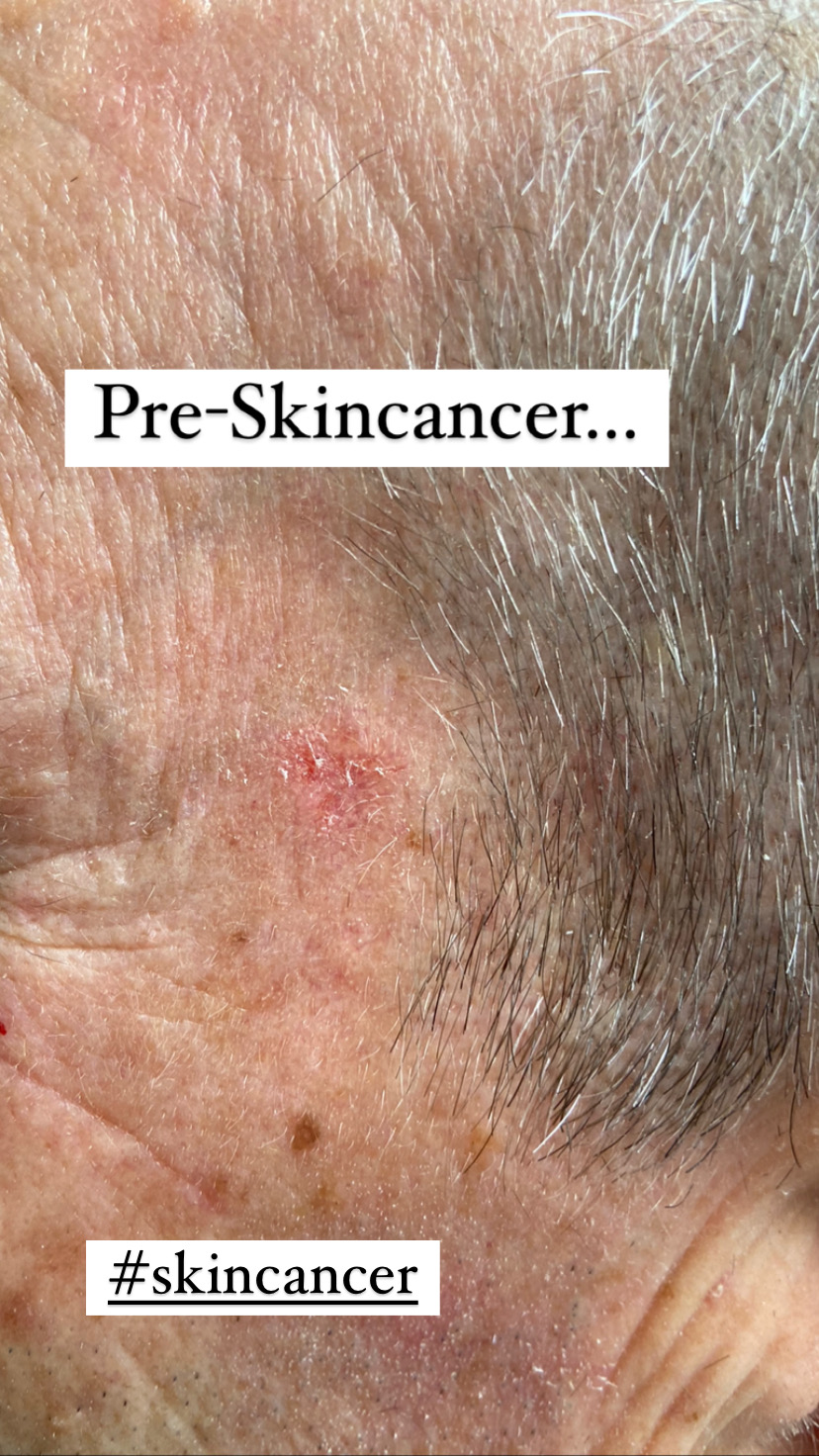
Actinic Keratosis (Pre-Skin Cancer) · Kare Skin Cancer Center · Dr. Tiffany Sierro · Los Angeles Erythematous, scaly actinic keratosis on sun-damaged skin · Pre-cancerous lesion with 5–10% lifetime risk of progression to squamous cell carcinoma · Treatment recommended to prevent SCC development
The Lesion
This erythematous, rough-surfaced actinic keratosis on sun-damaged skin is a textbook presentation of the most common pre-cancerous skin lesion seen in Southern California. The surrounding solar elastosis and diffuse photodamage indicate a field cancerization pattern requiring treatment beyond the single visible lesion.
The Risk
Each individual AK carries a 5–10% lifetime risk of progressing to invasive squamous cell carcinoma. Patients with five or more AKs have a cumulative SCC risk exceeding 10–15% over 5 years. Prompt treatment — not watchful waiting — is the standard of care recommended by the American Academy of Dermatology for actinic keratoses.
Dr. Sierro's Approach
Dr. Sierro treated this patient with cryotherapy to the visible AK combined with field therapy prescription to address the surrounding photodamaged skin — reducing the risk of new AKs developing in adjacent areas. Long-term surveillance with annual full-body screening was established to monitor for recurrence and new lesion development.
Warning Signs & Treatment Options
Recognizing Actinic Keratosis — Warning Signs
Rough, sandpaper-textured patch on sun-exposed skin that returns after peeling off
Scaly, erythematous (red-pink) patch on the face, scalp, ears, forearms, or hands
Flat to slightly raised lesion that is easier to feel (rough) than to see
Persistent, non-healing scaly area on the lip — actinic cheilitis, a high-risk variant
Itching, burning, or tenderness in a chronically sun-exposed skin area
Skin patch present for more than 4–6 weeks that has not resolved with moisturizer
Treatment Options at the Kare Skin Cancer Center
Cryotherapy (Liquid Nitrogen)
First-line treatment for individual actinic keratoses — liquid nitrogen applied directly to the AK at -196°C destroys the pre-cancerous keratinocytes. Quick, effective, and performed in-office without anesthesia. Multiple AKs can be treated in a single visit. 1–2 freeze-thaw cycles per lesion. Most patients experience mild blister formation and crust over 7–10 days before the treated skin heals cleanly.
Field Therapy — Efudex (5-FU)
Topical 5-fluorouracil (Efudex, Carac) is the most widely used field therapy for actinic keratosis — destroying not only visible AKs but subclinical pre-cancerous cells in the surrounding photodamaged field invisible to the naked eye. Applied once or twice daily for 2–6 weeks. Dr. Sierro prescribes Efudex with a structured protocol and regular monitoring to manage the expected inflammatory response and ensure compliance through the treatment course.
Imiquimod (Zyclara / Aldara)
Topical imiquimod stimulates innate and adaptive immune responses to eliminate AK-affected keratinocytes and reduce subclinical field disease. Applied 2–3 times weekly for 16 weeks (Aldara) or as a 2-cycle regimen (Zyclara). Well-tolerated compared to 5-FU with a different side effect profile — useful for patients who have not tolerated prior Efudex courses. Dr. Sierro selects between field therapy agents based on AK extent, prior response, and patient tolerance.
Photodynamic Therapy (PDT)
Photodynamic therapy is the most comprehensive treatment for extensive field cancerization — large areas of sun-damaged skin with multiple AKs. A photosensitizing agent (aminolevulinic acid, ALA) is applied to the treatment area and preferentially absorbed by AK-affected cells. After an incubation period, the area is activated with a specific wavelength of light — destroying the pre-cancerous cells with remarkable specificity for photodamaged versus normal skin. PDT also produces skin rejuvenation as a secondary benefit. Performed in-office at Kare Plastic Surgery.
"When I see one actinic keratosis, I'm already looking at the whole face, the scalp, the ears — because wherever that one visible AK appeared, there are subclinical lesions we can't see yet in the same field. That's where field therapy makes the difference. We're not just treating what's visible; we're treating the risk."
Tiffany Sierro, MD · Board-Certified Dermatologist · Kare Skin Cancer Center, Santa Monica
Frequently Asked Questions
What is actinic keratosis and is it dangerous?
Actinic keratosis is a pre-cancerous skin lesion caused by UV damage — each AK carries a 5–10% lifetime risk of progressing to squamous cell carcinoma. Patients with multiple AKs have significantly elevated skin cancer risk. Early treatment with Dr. Sierro at Kare Plastic Surgery is the most effective prevention strategy. Call (310) 998-5533.
What are the treatment options for actinic keratosis in Los Angeles?
Dr. Sierro offers cryotherapy for individual AKs, Efudex (5-FU) and Zyclara (imiquimod) for field cancerization, and photodynamic therapy (PDT) for extensive sun-damaged areas. Treatment selection depends on the number, distribution, and severity of AKs. Same-week appointments available. Call (310) 998-5533.
How do I know if I have an actinic keratosis?
AKs typically appear as rough, scaly, or sandpaper-textured patches on sun-exposed skin — face, scalp, ears, forearms, and hands. They are often more easily felt than seen. Any rough, persistent patch on sun-exposed skin lasting more than 4–6 weeks should be evaluated by Dr. Sierro. Call (310) 998-5533.
Schedule Your Evaluation
Kare Skin Cancer Center · Kare Plastic Surgery · 804 7th Street, Santa Monica
Treat Your Actinic Keratosis Before It Becomes Skin Cancer
Dr. Tiffany Sierro, board-certified dermatologist at the Kare Skin Cancer Center, provides expert actinic keratosis treatment and skin cancer prevention throughout Los Angeles — cryotherapy, field therapy, and photodynamic therapy with individualized protocols. Same-week appointments available.