Santa Monica Vein Center · Kare Plastic Surgery · Los Angeles
Foot Spider Vein Treatment Santa Monica
804 7th Street, Santa Monica, CA 90403 · (310) 998-5533
Ankle and foot spider vein sclerotherapy, laser vein treatment, and surgical vein removal — by board-certified vein surgeon Dr. Raffy Karamanoukian at the Santa Monica Vein Center
Call (310) 998-5533 Schedule a Vein Consultation
BoardCertified Vein Surgeon
Foot &Ankle Vein Specialist
Foot Spider Vein Treatment Santa Monica
Foot and Ankle Spider Veins Are the Most Resistant to Treatment. That Requires a Vein Specialist.
Dr. Raffy Karamanoukian, MD FACS Board-Certified Vein & Plastic Surgeon Foot & Ankle Spider Veins · Sclerotherapy · Laser Vein Treatment · Surgical Vein Removal · Santa Monica Vein Center
Spider veins on the foot and ankle are the most anatomically challenging vein presentations in the entire venous system. Unlike spider veins on the thigh or calf — where hydrostatic venous pressure is moderate — the foot and ankle sit at the most gravity-dependent point of the circulatory system. This creates maximum hydrostatic pressure in the dependent foot veins and makes spider vein formation more aggressive, more extensive, and significantly more resistant to treatment than spider veins anywhere else on the leg.
Treating foot and ankle spider veins effectively requires more than standard sclerotherapy technique. At the Santa Monica Vein Center at Kare Plastic Surgery, board-certified vein surgeon Dr. Raffy Karamanoukian, MD FACS evaluates the complete venous anatomy of the foot and ankle — identifying visible surface veins and their underlying reticular feeder vessels — before designing a treatment protocol that addresses both the visible and subclinical components of the vein problem. This specialist approach produces significantly more durable results than treating visible veins in isolation.
Foot & Ankle Spider Vein Services — Santa Monica Vein Center
- Spider vein sclerotherapy — foot, ankle, and heel
- Reticular feeder vein treatment — ultrasound-guided technique when indicated
- Laser vein treatment for fine spider veins resistant to sclerotherapy
- Ambulatory phlebectomy for small varicose veins of the ankle and foot
- Compression stocking prescription and management
- Venous insufficiency evaluation for ankle swelling and skin changes
- Lipodermatosclerosis and stasis dermatitis assessment and management
- Maintenance sclerotherapy for recurrent ankle and foot veins
Santa Monica Vein Center · Kare Plastic Surgery · (310) 998-5533
Spider veins on your feet or ankles? Schedule a specialist vein consultation with Dr. Karamanoukian today.
Clinical Documentation — Santa Monica Vein Center · Dr. Raffy Karamanoukian
Ankle & Foot Spider Veins — Patient at Kare Plastic Surgery
Actual patient at the Santa Monica Vein Center · Spider veins and reticular veins of the ankle and foot · Treatment with targeted sclerotherapy by Dr. Raffy Karamanoukian
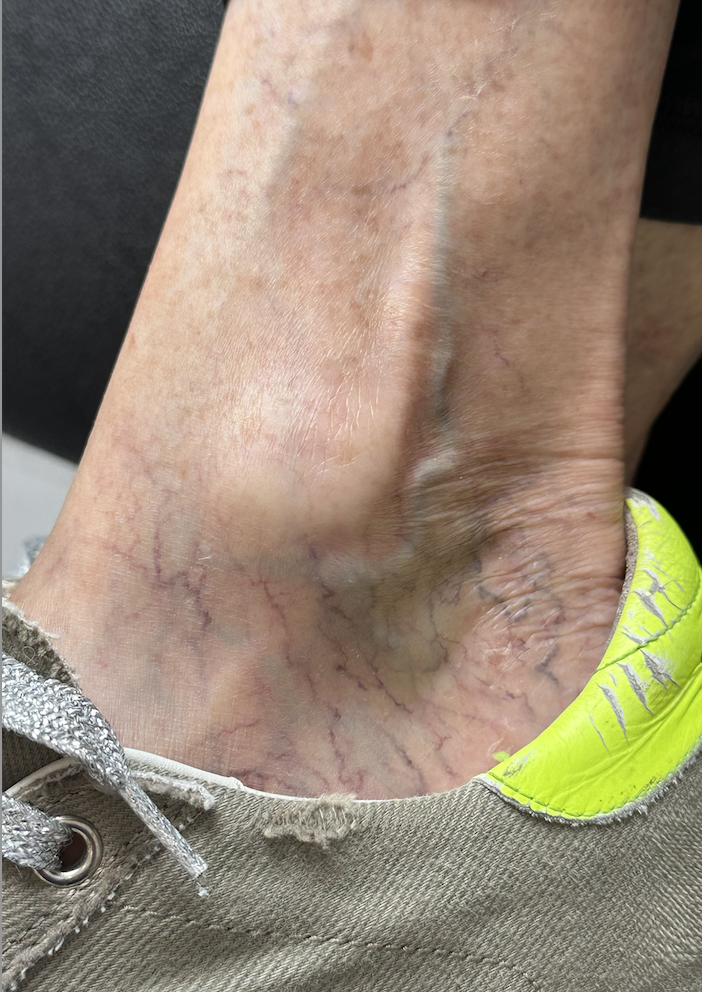
Ankle & Foot Spider Veins · Santa Monica Vein Center · Dr. Karamanoukian Extensive spider vein and reticular vein network on the medial ankle and plantar foot · High hydrostatic pressure pattern · Targeted sclerotherapy protocol with reticular feeder treatment
The Presentation
This patient presents with a classic high-pressure ankle and foot spider vein pattern — extensive red and blue spider veins radiating across the medial ankle and plantar heel. The distribution and density of the vein network reflects the increased hydrostatic pressure at the most gravity-dependent vein zone of the leg, with multiple visible reticular feeders supplying the surface spider vein clusters.
Why This Is Difficult
Ankle and foot spider veins form under maximum venous hydrostatic pressure — gravity pulls blood pooling toward the foot at all times the patient is upright. Surface sclerotherapy alone fails to address the reticular feeder vessels driving the spider vein formation. Dr. Karamanoukian identifies and treats these feeders as part of a comprehensive protocol, producing more durable clearance than surface-only treatment.
Treatment Protocol
Dr. Karamanoukian designs a staged sclerotherapy protocol — beginning with the largest reticular feeder vessels before progressing to smaller surface spider veins in subsequent sessions. Medical-grade compression is prescribed immediately following each session to support vein collapse. Most patients require 3–5 sessions spaced 4–6 weeks apart for optimal clearance.
Expected Results
Progressive clearing of the spider vein and reticular vein network occurs over 6–12 weeks following each sclerotherapy session as the treated vessels are reabsorbed. Maintenance sessions are typically recommended at 12-month intervals to address any recurrent or new vein formation, as the underlying hemodynamic pressure at the ankle and foot remains the same after treatment.
Why Foot Veins Are Different
Why Foot and Ankle Spider Veins Require a Specialist
Hydrostatic Pressure
The foot and ankle sit at the bottom of the venous column — where gravitational hydrostatic pressure is highest. This pressure makes foot spider veins more persistent, more extensive, and far more resistant to standard treatment than veins on the thigh or calf.
Reticular Feeders
Visible foot spider veins are typically fed by deeper reticular vessels that are not visible on the skin surface. Treating only the visible veins without addressing the reticular feeders leads to rapid recurrence — the standard outcome when surface-only treatment is applied to ankle and foot veins.
Anatomical Complexity
The plantar surface of the foot contains a dense network of superficial veins in close proximity to tendons, nerves, and neurovascular structures. Injections in this area require the anatomical knowledge and precision technique of a specialist vein surgeon to avoid inadvertent injury.
Treatment Options at the Santa Monica Vein Center
Sclerotherapy
The cornerstone of foot and ankle spider vein treatment — a sclerosant solution injected into the target veins collapses the vessel wall, which is then gradually reabsorbed. Dr. Karamanoukian calibrates sclerosant concentration to the diameter of each vessel being treated and uses a systematic sequential approach — feeders first, surface veins second — to maximize clearance and minimize recurrence. Compression stockings worn post-session are essential for treatment success at the foot and ankle. Most patients require 3–5 sessions.
Laser Vein Treatment
Fine spider veins on the foot and ankle that are too small for needle injection or that are resistant to sclerotherapy can be treated with surface laser vein ablation. The laser delivers targeted thermal energy to the spider vein, photocoagulating the vessel without affecting surrounding skin. Surface laser is particularly effective for fine red spider veins less than 0.5mm on the ankle and dorsal foot and can be combined with sclerotherapy in the same treatment session for comprehensive clearance.
Ambulatory Phlebectomy
Small varicose veins of the ankle and foot — vessels too large for sclerotherapy but too small for surgical stripping — can be removed through ambulatory phlebectomy. Tiny micro-incisions are made directly over the vein and the vessel is extracted with a phlebectomy hook under local anesthesia. No sutures are required. The procedure is performed in-office and patients walk immediately following treatment. Phlebectomy produces definitive single-session clearance for qualifying varicose veins of the ankle and foot.
Compression & Maintenance
Long-term compression stocking therapy is an essential component of any foot and ankle vein treatment program — reducing the hydrostatic pressure gradient that drives vein formation and slowing the development of new veins over time. Dr. Karamanoukian prescribes medical-grade graduated compression stockings at an appropriate pressure class for each patient and schedules annual maintenance sclerotherapy sessions to address new vein formation before it becomes extensive.
A note on treatment: Foot and ankle spider veins cannot be permanently eliminated — the hemodynamic conditions that caused them (gravity, venous pressure, genetic predisposition) remain unchanged after treatment. What specialist treatment achieves is significant, progressive clearance of existing veins and a maintenance strategy that keeps new formation in check. Dr. Karamanoukian sets clear, realistic expectations at every consultation. Call (310) 998-5533.
"Venous pressure can make spider veins occur more prominently on the feet. Our goal is to reduce the underlying causes of spider veins on the feet and ankles."
— Dr. Raffy Karamanoukian · Board-Certified Vein & Plastic Surgeon · Santa Monica Vein Center
Frequently Asked Questions
Can spider veins on the foot and ankle be treated in Santa Monica?
Yes. Dr. Raffy Karamanoukian at the Santa Monica Vein Center at Kare Plastic Surgery treats spider veins, reticular veins, and small varicose veins of the foot and ankle with sclerotherapy, laser, and ambulatory phlebectomy. Same-week appointments available. Call (310) 998-5533.
Why are foot and ankle spider veins so hard to treat?
The foot and ankle are the most gravity-dependent part of the venous system — where hydrostatic venous pressure is highest. This pressure makes spider veins more resistant and more prone to recurrence than veins elsewhere on the leg. Effective treatment requires addressing both visible surface veins and their underlying reticular feeder vessels. Dr. Karamanoukian's specialist protocol targets both layers. Call (310) 998-5533.
How many sclerotherapy sessions are needed for foot spider veins?
Most patients require 3–5 sclerotherapy sessions spaced 4–6 weeks apart for significant clearance of foot and ankle spider veins. Medical-grade compression between sessions is essential. Annual maintenance sessions are typically recommended. Dr. Karamanoukian designs an individualized protocol at consultation. Call (310) 998-5533.
Schedule Your Foot Vein Consultation
Santa Monica Vein Center · Kare Plastic Surgery · 804 7th Street
Treat Your Foot & Ankle Spider Veins with Dr. Karamanoukian
Dr. Raffy Karamanoukian, board-certified vein and plastic surgeon at the Santa Monica Vein Center, provides expert foot and ankle spider vein treatment for patients throughout Los Angeles — targeted sclerotherapy, laser, and phlebectomy with specialist technique for the most resistant vein presentations. Same-week appointments available.